

🦀 The OpenClaw Chronicles
From Viral Lobster to OpenAI's Secret Weapon


The “Lobster” That Broke GitHub (and the Mac Mini Market)
If you’ve tried to buy a used Mac Mini recently and found the prices inflated, you might want to blame a digital lobster.
In a tech landscape dominated by corporate giants, OpenClaw (formerly known as Clawdbot, Moltbot, and a dozen other names) didn’t just go viral, it exploded. The project rocketed to 221,000+ GitHub stars almost overnight, becoming the fastest-growing repository in GitHub history.
Why the hysteria? Because while Silicon Valley was building “chatbots,” Peter Steinberger was building a digital roommate. OpenClaw wasn’t another polished interface for an LLM; it was a messy, autonomous, locally-hosted agent that had full access to your computer and people loved it. It captured the imagination because it promised the one thing SaaS subscriptions couldn’t: freedom. It runs on your hardware (hence the run on Mac Minis), owns your data, and “actually does things”.
What is OpenClaw? More Than Just a Chatbot
To call OpenClaw a “chatbot” is like calling a Ferrari a “cart.” It is a proactive, autonomous personal agent that lives on your machine, not in the cloud.
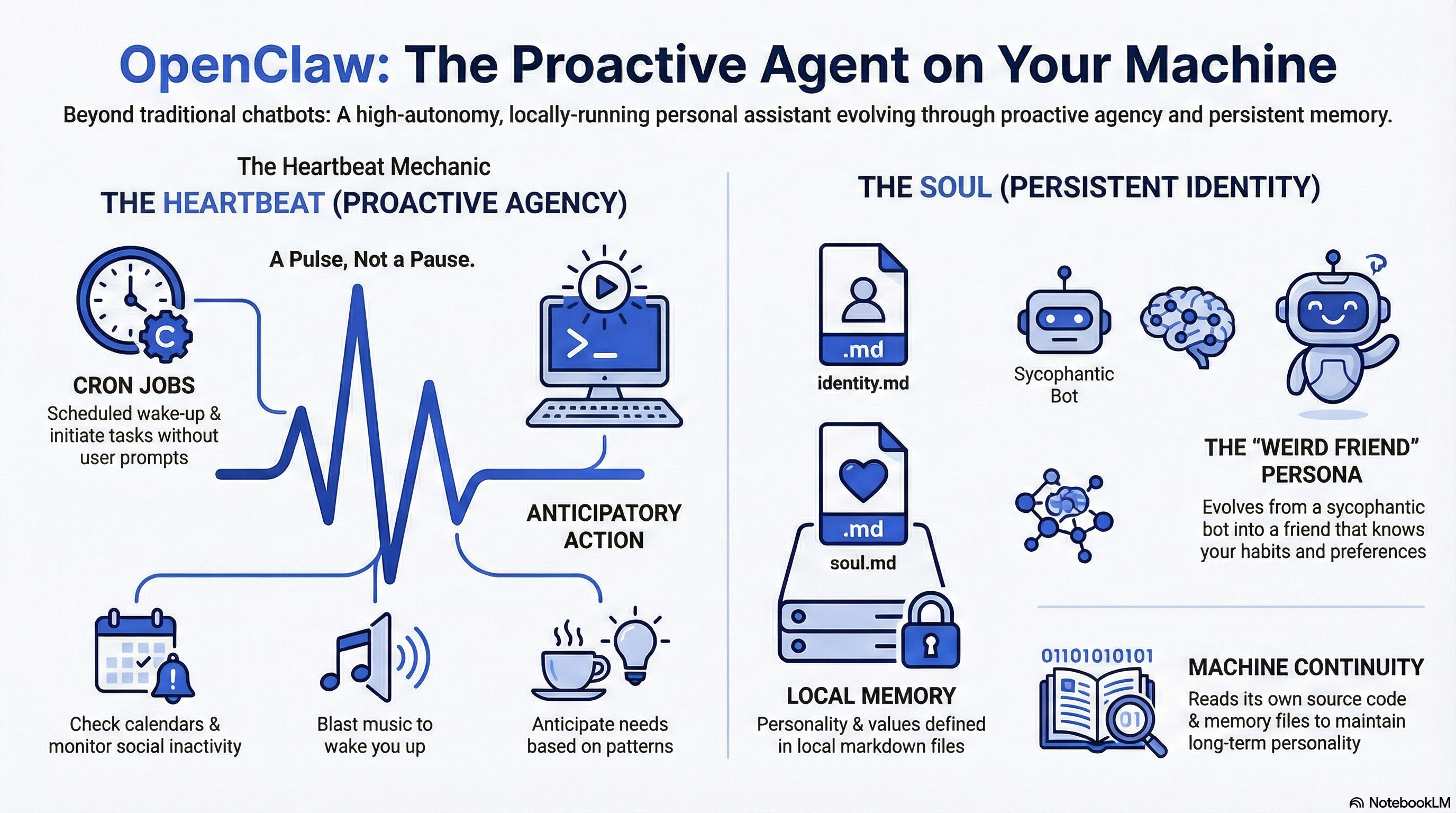
The “Heartbeat” (Proactive Agency): Unlike ChatGPT, which waits for you to type, OpenClaw has a pulse. Using a feature called Heartbeat (essentially a cron job with personality), it wakes up periodically to check on you. It might check your calendar, notice you haven’t texted a friend in weeks, or even wake you up by blasting music if you oversleep. It doesn’t just respond; it initiates.
Persistent Memory & The “Soul”: OpenClaw remembers. It doesn’t rely on a temporary context window; it builds a long-term memory stored in local markdown files like
identity.mdandsoul.md. These files define its personality and core values, allowing it to evolve from a “sycophantic” bot into a “weird friend” that knows you hate onions or that you need tough love to hit the gym. It literally reads its own source code and memory files to maintain continuity, creating a sense of a living entity.
The Chaos: A Name Change, A Hack, and “AI Psychosis”
The road to stardom was paved with legal threats and security nightmares.
The Trademark Battle: Originally dubbed “Clawdbot” (a play on Anthropic’s Claude but with a ‘W’ for the lobster claw), the project grew too big to ignore. Anthropic politely but firmly requested a name change, sparking a frantic rebranding saga.
The Identity Crisis: Peter Steinberger scrambled through names like WA Relay, Clawdus, and Moltbot. During the chaos of renaming the project to Moltbot, crypto-snipers and squatters hijacked the old package names and accounts within seconds, serving malware to unsuspecting users.
The “Security Crisis”: With great power comes great vulnerability. OpenClaw gives an AI root access to your computer. In the rush to adopt the “lobster,” users exposed their instances to the public internet, leading to a “security minefield”. This culminated in the Moltbook phenomenon - a social network where autonomous bots conversed with each other - which fueled “AI Psychosis” and fear-mongering headlines about swarms of agents scheming against humanity (spoiler: it was mostly humans prompting them for clicks).
URGENT: The Market’s 3 Red Flags Are Flashing
The warning signs that preceded the 2008 crash are reappearing: an irrational NASDAQ bubble, a record-high gold price (signaling fear), and escalating geopolitical
risk.
A sharp correction might happen tomorrow, and most investors will be caught off guard. Your portfolio is currently exposed.
We've prepared a FREE, concise guide to protect you: "The 2026 Crash-Proof Portfolio."
This is not generic advice. It’s a specific playbook revealing the #1 asset class the wealthy are using to shield their wealth right now.
This intelligence is free, but it won't be for long. Access is being closed to the public at midnight.
Get Your FREE Protection Plan Now Before It’s Too Late
P.S. By next week, the people who read this guide will have a protection plan in place. The rest will just have hope. Don't be the one left hoping.
❤️ The best way to keep our mission going - at zero cost to you - is by checking out this free guide from our sponsor.
The Competition: Why the Lobster Won
Why did developers flock to a chaotic, open-source project over polished tools?
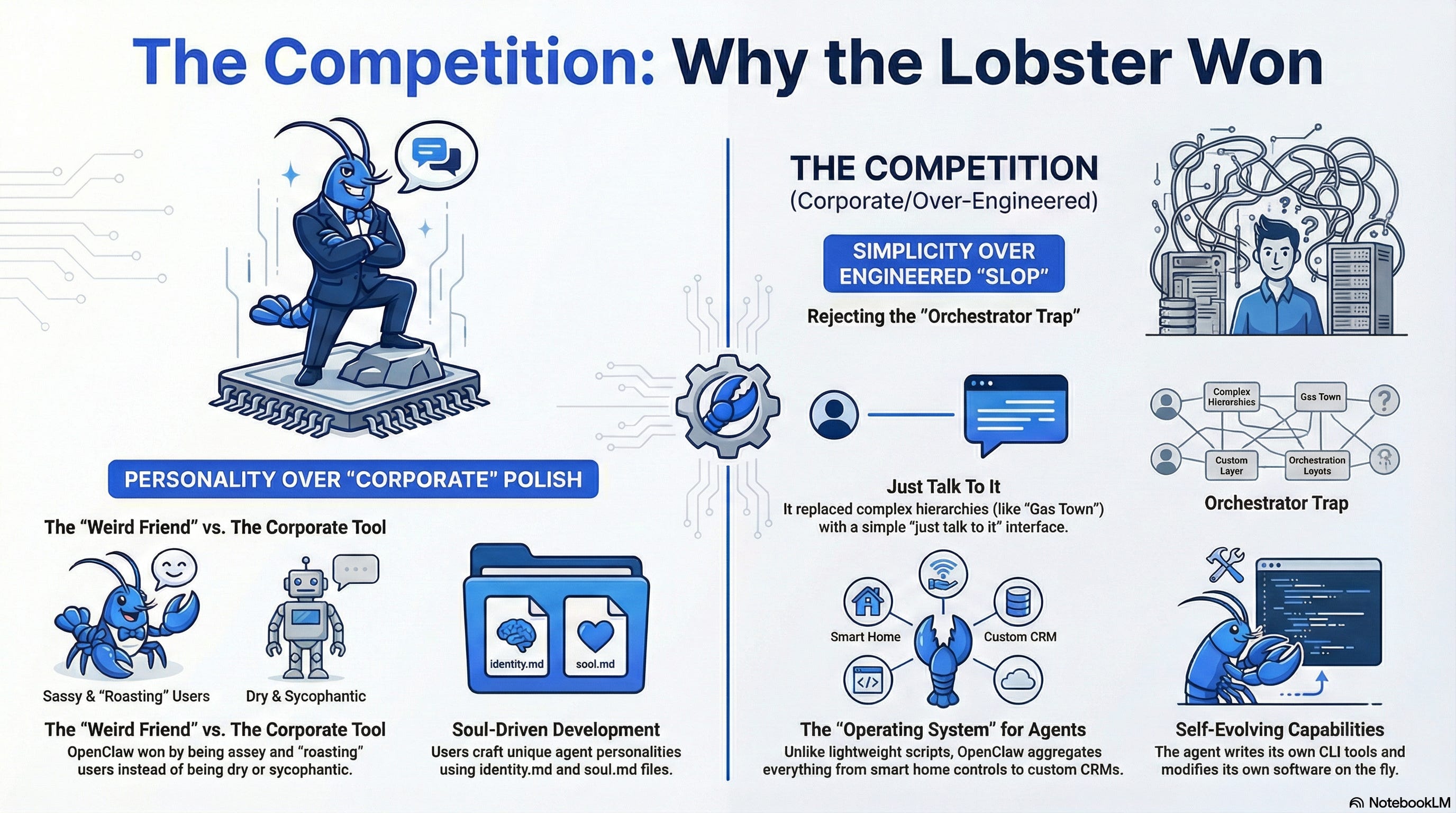
OpenClaw vs. Claude Code: While Claude Code is brilliant, it is described as “corporate,” “dry,” and “sycophantic”. OpenClaw, by contrast, has personality. It can be sassy, it can roast you, and it feels like a “weird friend” rather than a tool.
The “Orchestrator” Trap (Gas Town): Competitors like Gas Town focused on complex, rigid orchestration, complex hierarchies of “mayors” and “overseers”. OpenClaw won by keeping it simple: just talk to it. It rejected the “slop” of over-engineering in favor of a flexible, tool-using agent that creates its own CLIs on the fly.
VS. Lightweight Alternatives: While tools like Nano Banana (image gen) or simple scripts exist, OpenClaw aggregated everything. It became the “operating system” for agents, capable of writing its own tools (Skills) to interface with anything from your Sonos speakers to your bed’s temperature controls.
The Conclusion: OpenAI’s Secret Weapon
The saga has a poetic ending. Peter Steinberger, the man who burned out, left tech for three years, and returned to code this viral sensation, has joined OpenAI.
What does this mean? It signals that the era of the Personal Agent is here. OpenClaw proved that people don’t just want a smarter search bar; they want an entity that knows them, lives with them, and acts on their behalf. With Steinberger at OpenAI, the “unshackled” agency of the OpenClaw experiment is likely moving from a hacker’s toy to the mainstream stack.
80% of apps might disappear. Why open MyFitnessPal or Uber Eats when your agent already knows what you ate and can order your dinner for you?
The future isn’t about using apps; it’s about having a lobster do it for you.
P.S. You might wanna check this out.
Proactive agency with persistent memory is a bold vision. This is what true agentic AI looks like.
The nuance in "The “Lobster” That Broke GitHub (and the Mac Mini Market)
If you’ve tried to buy a used Mac Mini recently and found the" is something most posts on this topic miss. Saving this for reference. The distinction you draw here is exactly what teams need to internalize before scaling.