



Welcome to the 68th issue of AI Agents Simplified 🍻
This issue is brought to you by CircleCI

If you’re anything like me, you’ve probably opened ten browser tabs trying to learn AI, only to close all of them an hour later feeling more confused than when you started. There’s no shortage of tutorials out there, the problem is figuring out which ones are actually worth your time.
I’ve spent quite a lot of time during the last few years bouncing between courses, GitHub repos, and half-finished side projects and I’ve landed on a shortlist of resources I keep coming back to. These aren’t flashy paid courses or four-hour YouTube crash courses. They’re free, well-maintained repositories that people who actually know what they’re doing put together and they cover everything from “I’ve never written a line of Python” to “I want to build a production AI agent.”
Here’s my personal list along with some honest thoughts on who each one is really for.
1. Start With the Basics: Python - 100 Days
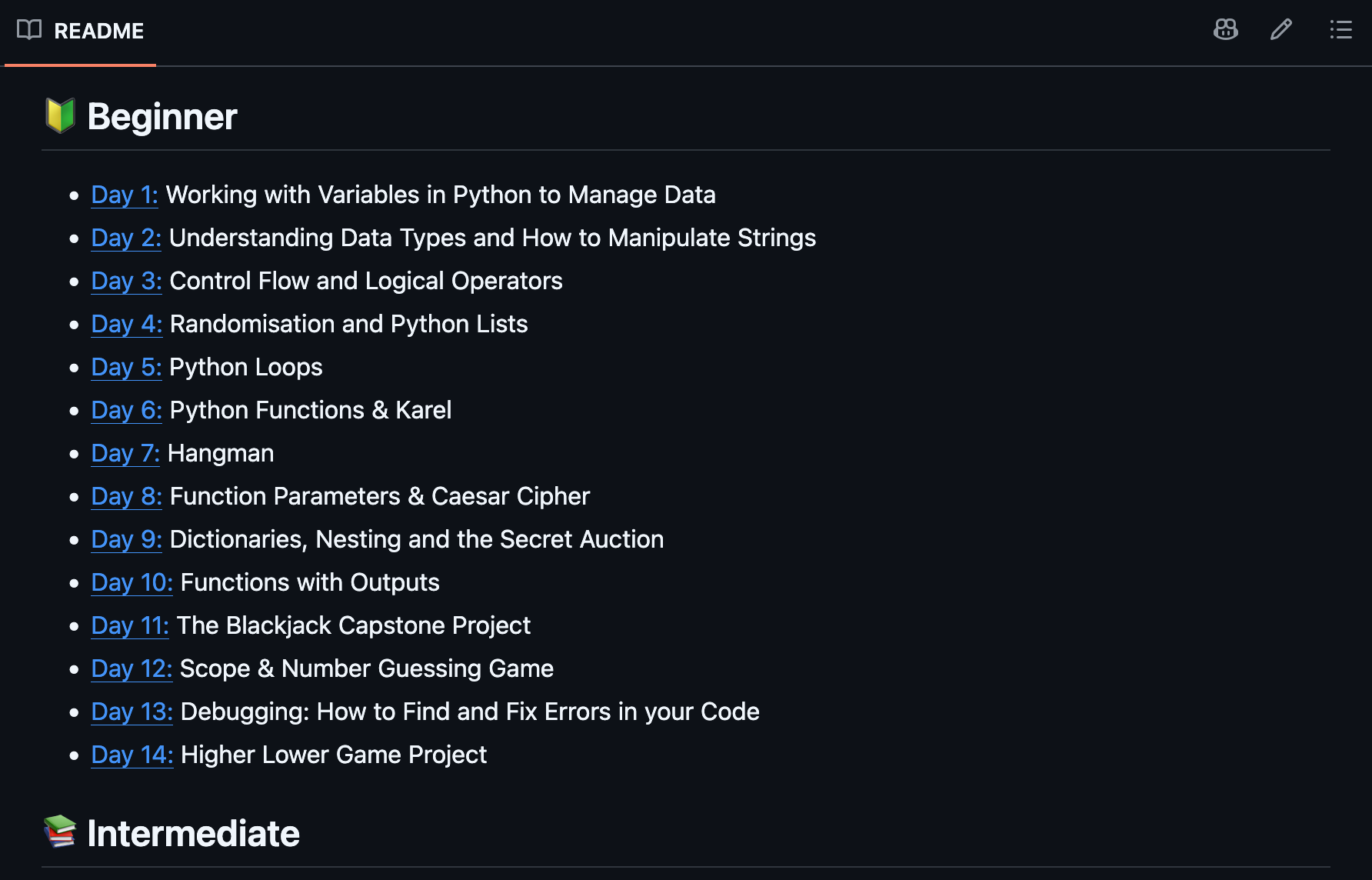
If you're brand new to programming, don't skip this step no matter how tempting it is to jump straight into AI. This repo walks you through Python fundamentals over a hundred days, gradually moving into things like data analysis and web development. It's a slow burn but that's kind of the point. It helps you build a real foundation instead of memorizing code you don't understand.
My advice
you don’t need to do all 100 days before moving on. Once you’re comfortable writing basic scripts and understand how functions and data structures work, you’re ready to move forward.
2. Get the Big Picture: Generative AI for Beginners
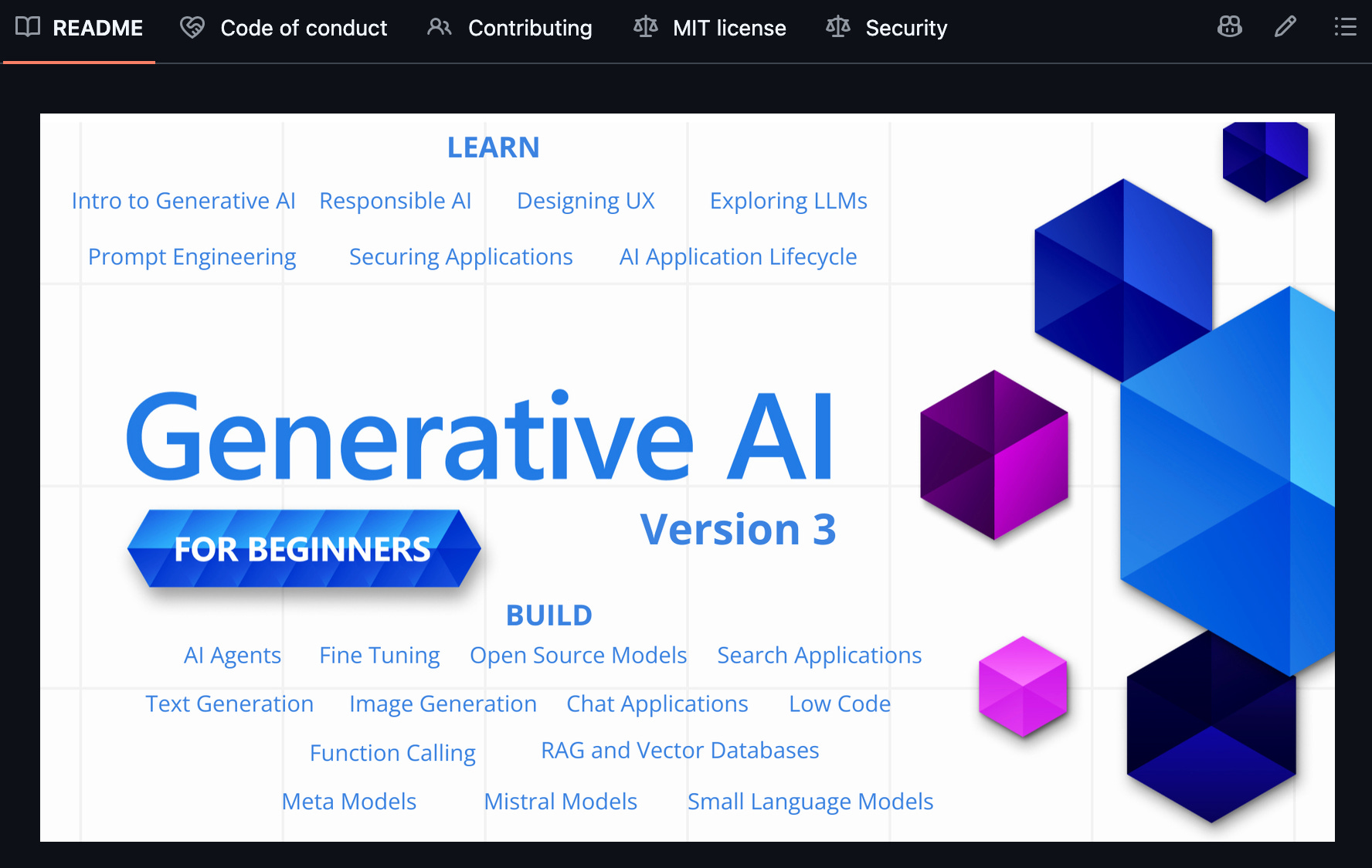
This one from Microsoft, is a genuinely solid starting point if you want to understand what generative AI actually is before you start building anything. It covers the basics of how large language models work, how to write effective prompts, what retrieval-augmented generation (RAG) means, a first look at AI agents, and even some fine-tuning concepts.
Think of this as your orientation course. It won’t make you an expert, but it’ll make sure you’re not lost when people start throwing around terms like “RAG” or “fine-tuning” in conversation.
If you want the link to all these resources, comment “Links” and I’ll send it to you.
Unmissable Event of Augest*
This is our very first AI Agents Simplified event, marking the start of a new ongoing series. We’re always looking for industry experts to feature, so please reply with ‘Speaker‘ if you’d like to apply for a future session.

Join us online to learn how to optimize your CI/CD pipelines for auto-generated code. We’ll explore practical strategies, new tools, and real-world tips to keep your development cycles smooth and efficient. Perfect for teams ready to improve their automation processes.
3. See What's Really Going On: LLMs From Scratch
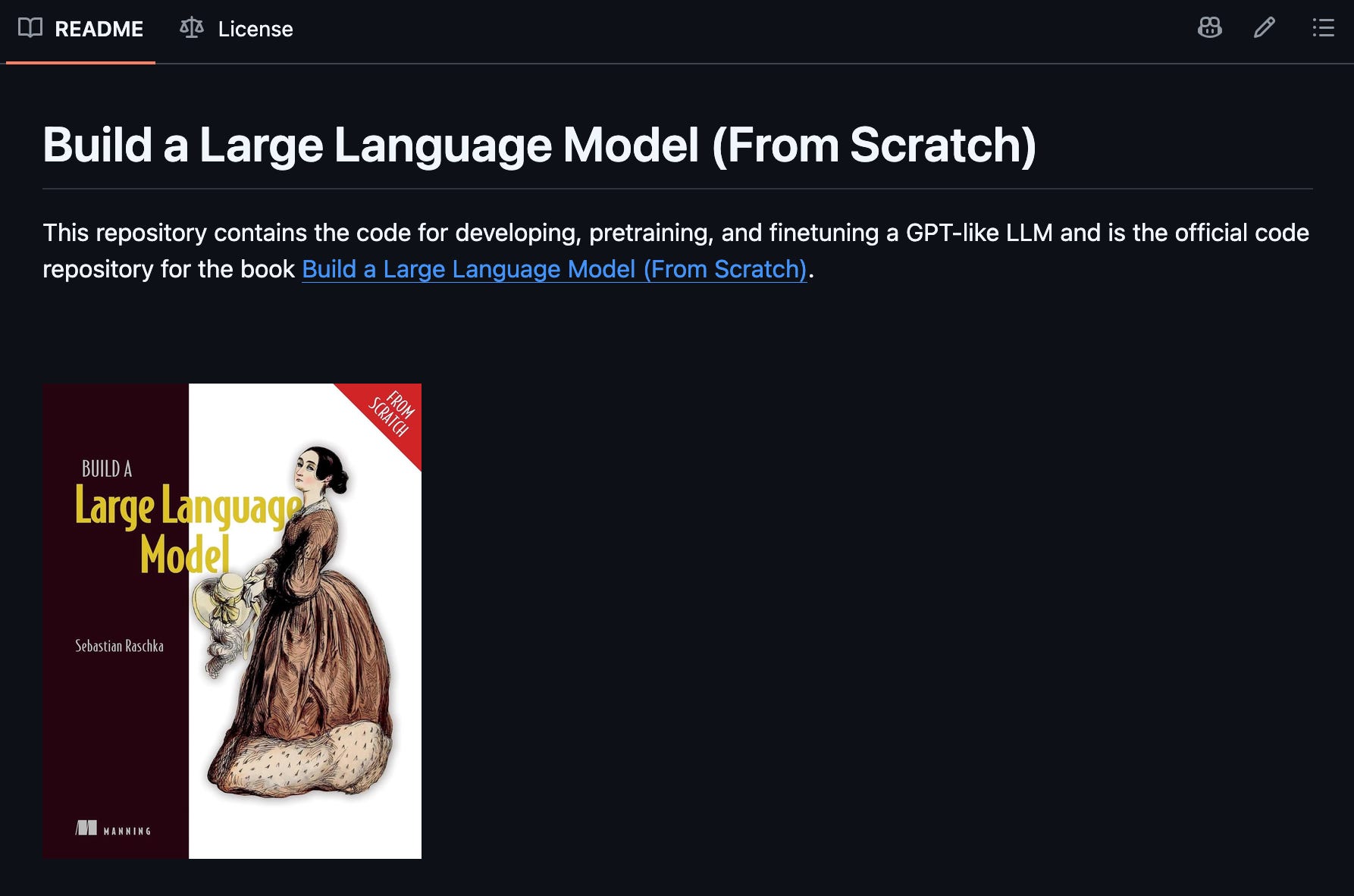
This is one of my personal favorites, and it's for people who want to go a level deeper. Instead of just using a large language model, you actually build one piece by piece. You'll work through tokenization, embeddings, attention, transformers, and training, ending up with a real understanding of what's happening under the hood.
Fair warning!
this isn't a weekend project. It's for people who genuinely want to understand the mechanics rather than just use the tools. If that's you, it's one of the best resources I've come across.
4. Build Your ML Foundation: Machine Learning for Beginners
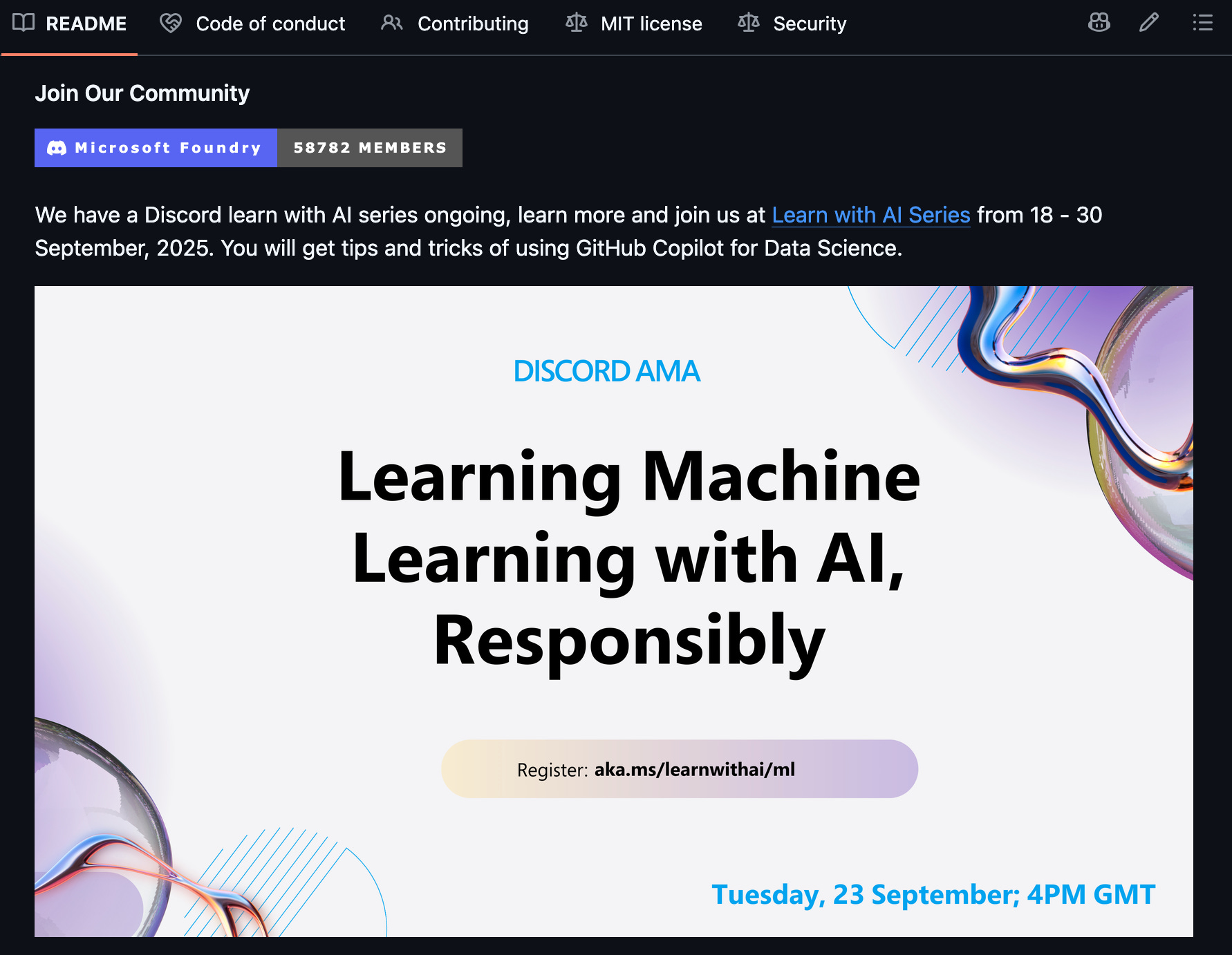
Before you dive headfirst into LLMs, it helps to understand classical machine learning , the concepts that everything else is built on. This is a structured, 12-week curriculum with 26 lessons that walks you through those fundamentals in a logical order.
If you’ve ever felt like you jumped straight to the “advanced” stuff without understanding the basics, this is a good way to backfill that knowledge
Become the go-to AI expert in 30 days with Superhuman AI

AI keeps coming up at work, but you still don't get it?
That's exactly why 1M+ professionals working at Google, Meta, and OpenAI read the Superhuman AI newsletter daily.
Here's what you get:
Daily AI news that matters for your career – Filtered from 1000s of sources so you know what affects your industry.
Step-by-step tutorials you can use immediately – Real prompts and workflows that solve actual business problems.
New AI tools tested and reviewed – We try everything to deliver tools that drive real results.
All in just 3 minutes a day
5. Move From Learning to Building: OpenAI Cookbook
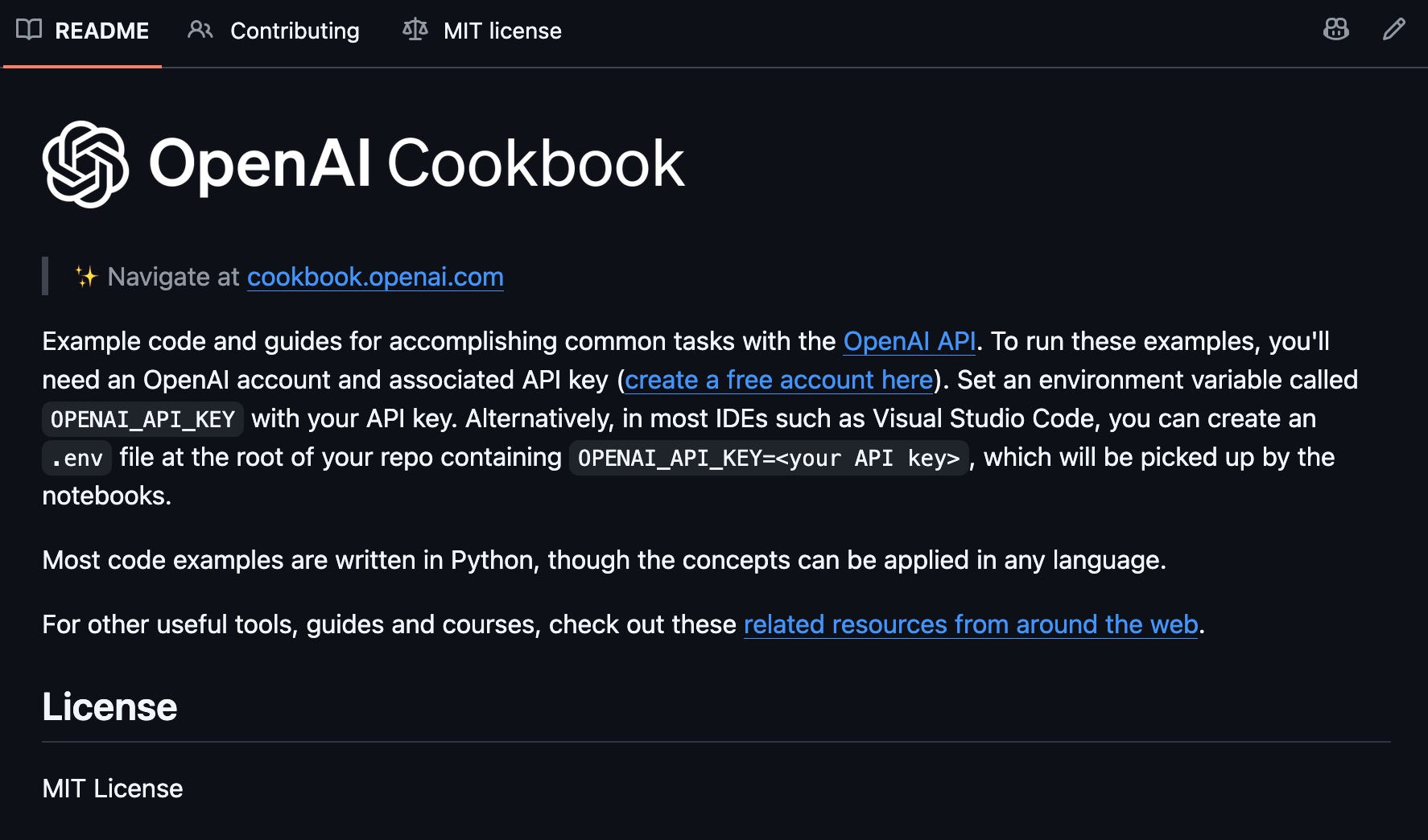
At some point, you have to stop reading and start building. This is where the OpenAI Cookbook comes in. It’s a collection of practical, real-world examples for building applications using OpenAI’s models. Instead of theory, you get working code you can learn from and adapt.
I’d treat this less like a course and more like a reference you keep open in a tab while you’re actually building something.
6. Explore the Visual Side: Stable Diffusion
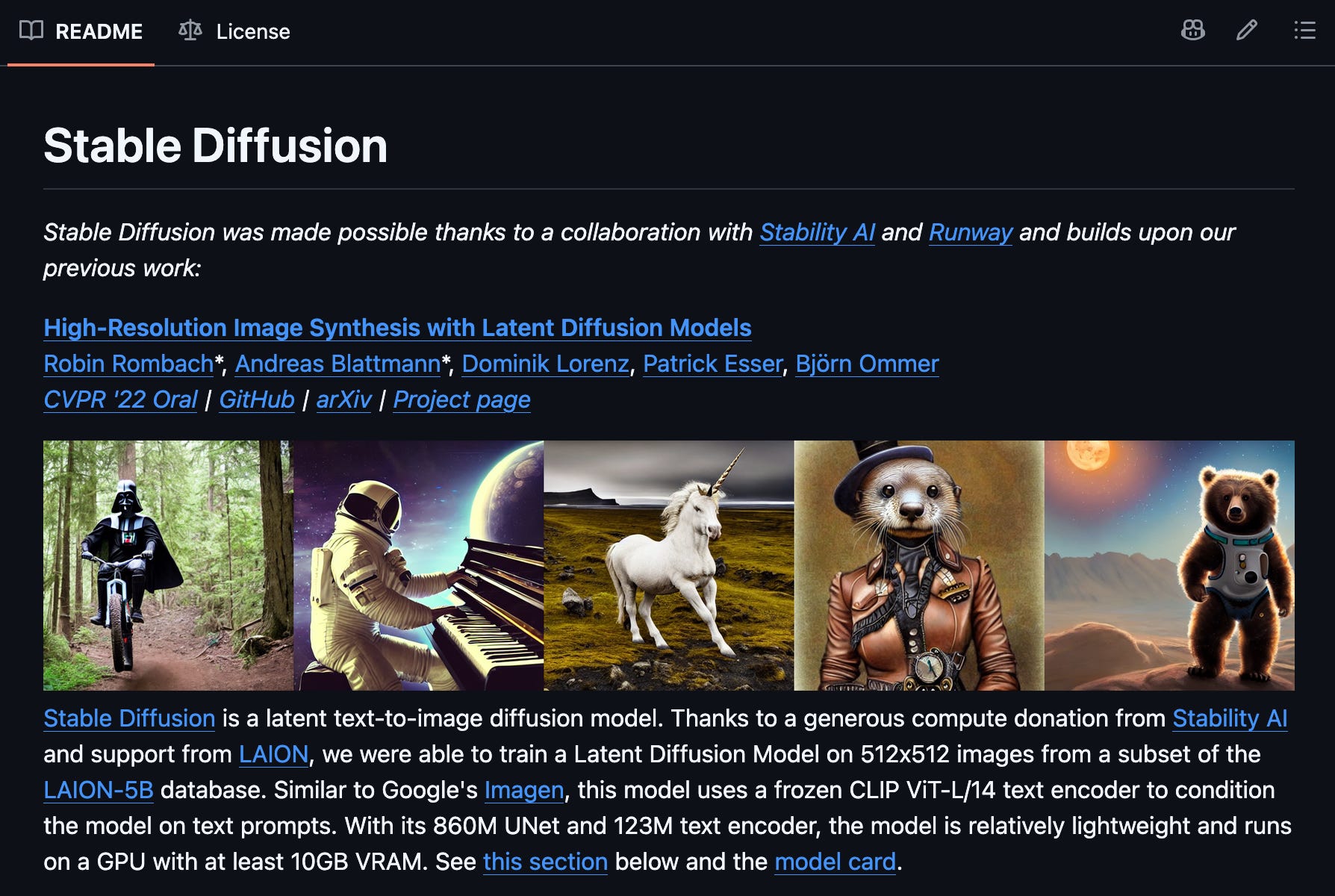
Not everyone in AI is working with text. If image generation interests you, this is the original repository behind Stable Diffusion, straight from the researchers who built it. It’s more technical than a beginner tutorial, so I’d recommend having some machine learning basics under your belt before diving in.
7. Learn to Build Agents: AI Agents for Beginners
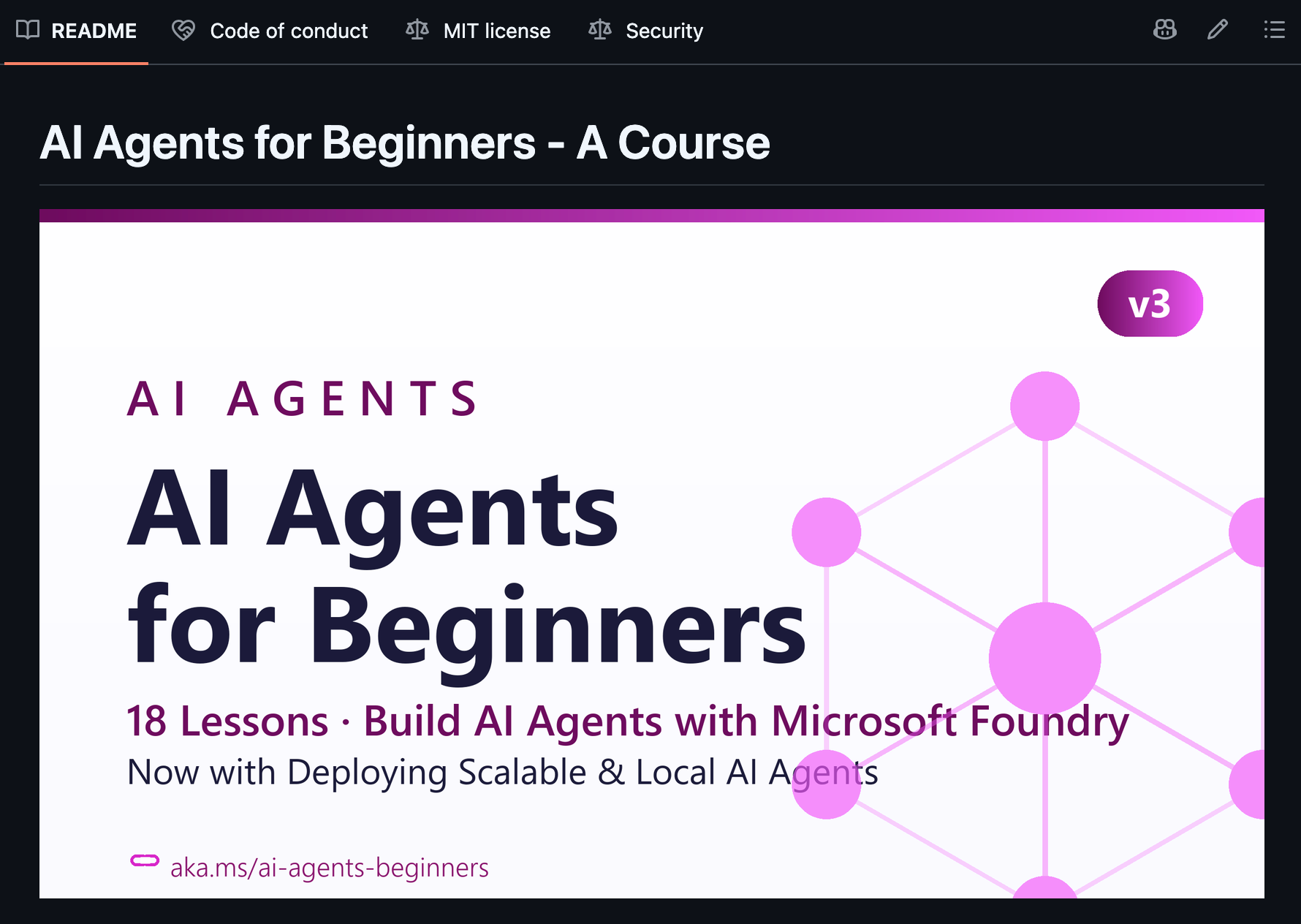
AI agents are having a real moment right now, and for good reason, they’re what turn a chatbot into something that can actually take action. This course covers the core ideas behind agentic AI, RAG, popular agent frameworks, tool use, and even multi-agent systems, where several agents work together.
If you’ve already got a handle on the basics from resource #2, this is a natural next step.
If you want the link to all these resources, comment “Links” and I’ll send it to you.
8. Round Out Your Foundation: AI for Beginners
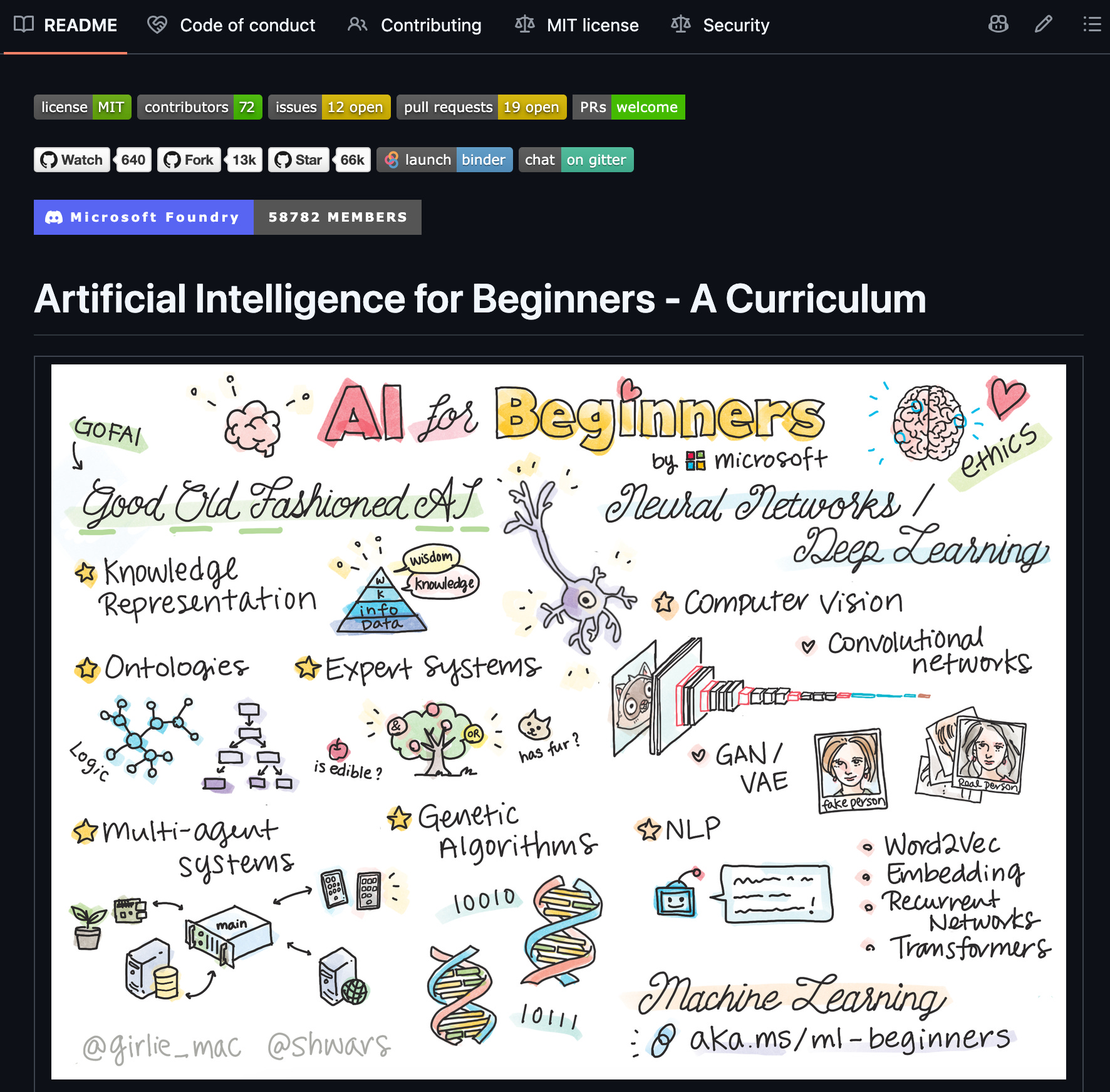
This is another structured Microsoft curriculum, 12 weeks and 24 lessons, but broader in scope than the ML-focused one above. It touches on neural networks, computer vision, natural language processing, deep learning, and even some classical AI concepts. It's a good option if you want one comprehensive resource that ties everything together rather than piecing it together from multiple sources.
9. Build Real Applications: LLM App
Once you're past the learning stage and want to build something that could actually run in production, this repo is worth a look. It focuses on practical LLM applications: RAG pipelines, enterprise search, real-time data handling, and vector search. It's less about learning concepts and more about seeing how those concepts come together into something usable.
10. Dive Into Computer Vision: Segment Anything
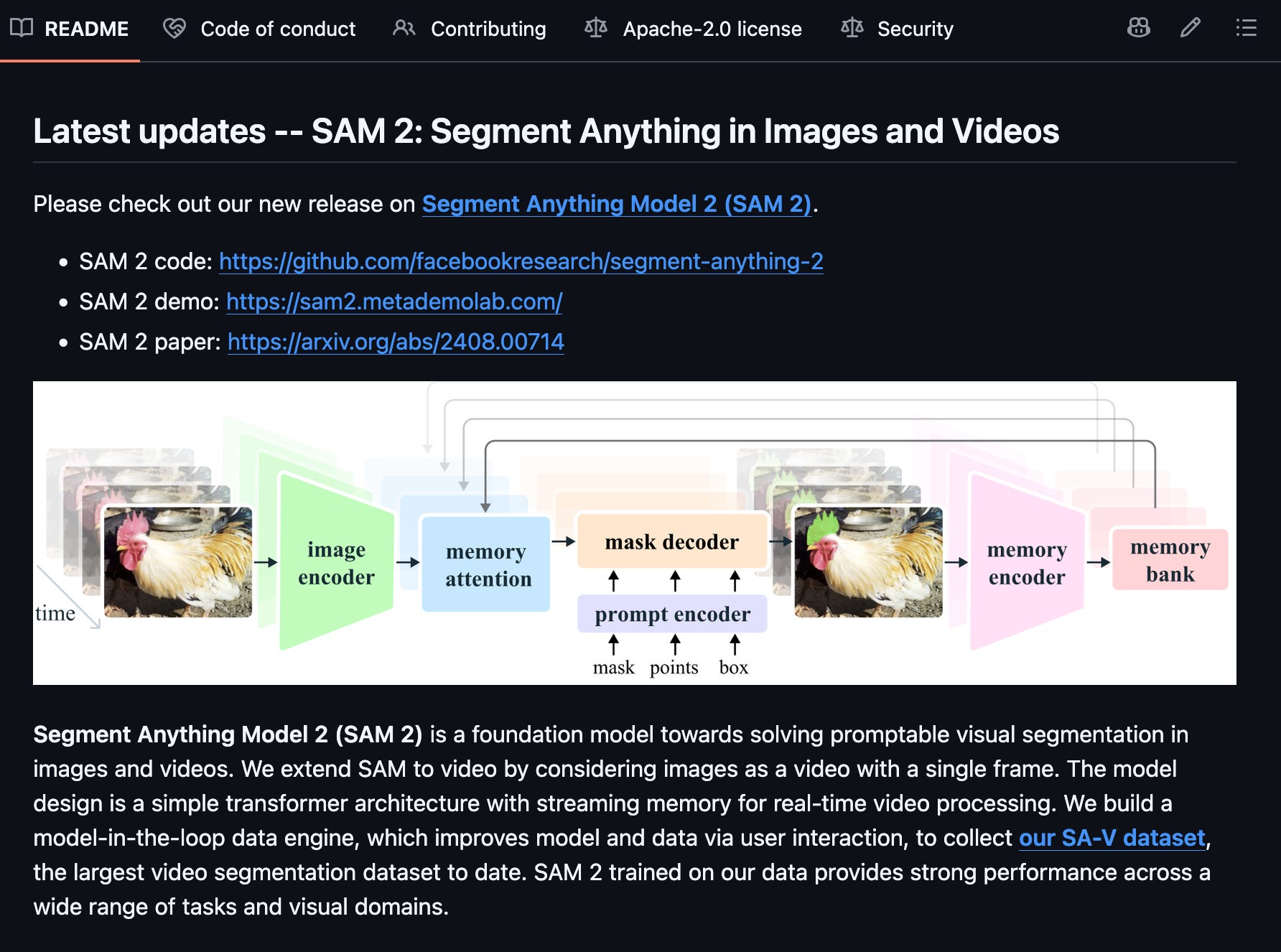
Last but not least, if computer vision is your thing, this is Meta’s foundation model for image segmentation, essentially, teaching a model to identify and separate objects within an image based on a prompt. It’s a great one to explore if you’re interested in the intersection of vision and multimodal AI.
So Where Should You Actually Start?
Here’s the honest truth: you don’t need all ten of these. Bookmarking every resource on this list and never opening any of them isn’t going to teach you anything. My advice is to figure out where you currently are and pick just one:
New to programming? Start with Python - 100 Days.
Want ML fundamentals first? Go with ML for Beginners.
Want the big picture on AI? Try AI for Beginners.
Curious how LLMs actually work? Dig into LLMs from Scratch.
Want to understand generative AI specifically? Generative AI for Beginners is your best bet.
Interested in agents? AI Agents for Beginners will get you there.
Ready to build something real? The OpenAI Cookbook or LLM App will get your hands dirty.
More into images than text? Segment Anything is worth your time.
Pick the one resource that matches where you are right now. Work through it. Build something small with what you learned, even if it’s rough around the edges. Then, and only then, move on to the next one.
AI engineering isn’t something you learn by collecting resources, it’s something you learn by using them. So do yourself a favor: close nine of these tabs, keep one open, and get started.
Let’s Collaborate
Hey there, I’m Hana, co-founder and technical writer at AI Agents Simplified. If you’re building in the AI space, have feedback on today’s post, or want to explore a collaboration, let’s chat! You can find me on LinkedIn or drop me an email. I read every message and would love to hear from you.
Links of course! Thank you
Thanks